Syangbochen & Samar Village Travel Guide
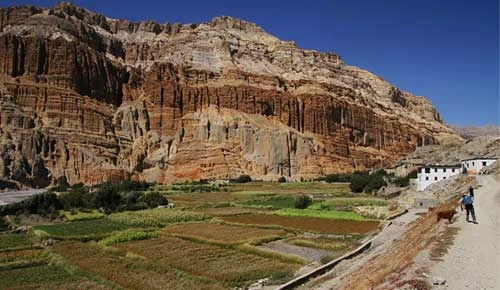
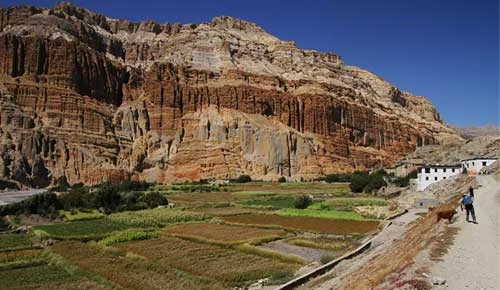
Syangbochen and Samar are small but important villages in Nepal’s Upper Mustang region. They are located above Chele on the way to Ghami and Lo Manthang. The area has a dry and open landscape, shaped by strong winds, which looks very different from the green hills in other parts of Nepal. Samar is a little bigger and often used as a rest stop by trekkers, with simple lodges and friendly local hospitality. Syangbochen is quieter and more remote, making it a peaceful place to stop and enjoy the dramatic Mustang scenery. Tibetan Buddhism closely connects both villages, with chortens, mani walls, and prayer flags visible throughout the area.
Visiting Syangbochen and Samar gives travelers a chance to see the natural beauty of Mustang up close. Wide valleys, rocky hills, and open skies make the area feel calm and relaxing. Life in the villages moves slowly, and walking around lets visitors experience local culture and daily routines. These villages are not just beautiful; they are also a place to rest, reflect, and enjoy the quiet charm of Upper Mustang while taking in its unique landscapes and traditions.
History
Syangbochen and Samar sit quietly along ancient trade routes that once linked Tibet and Nepal, but these paths were once busy with life. Traders carried salt, wool, and grains across the high passes, while monks and pilgrims moved slowly through the valleys, spreading stories, beliefs, and culture. These villages were important stopping points on long, demanding journeys through the harsh Mustang landscape.
Tibetan Buddhism continues to exert a strong influence even today. Old chortens, colorful prayer flags, and hidden cave monasteries still watch over the land, just as they have for centuries. Life in Syangbochen and Samar has changed very little, and many traditions are still part of everyday life, giving visitors a rare chance to experience a living history shaped by faith, trade, and time.
How to Get to Syangbochen & Samar
By Trekking
Trekking is one of the most common ways to reach Syangbochen and Samar. It lets travelers enjoy the mountains, valleys, and local culture up close. Most treks start from Jomsom or Chele and follow trails through small villages, high passes, and wide open valleys. From Chele, it usually takes 3–4 days to reach Syangbochen, with Samar as a rest or acclimatization stop. Along the way, trekkers can see traditional villages, mani walls, chortens, and the sacred Chungsi Cave, making it a memorable cultural and natural experience.
By Flight
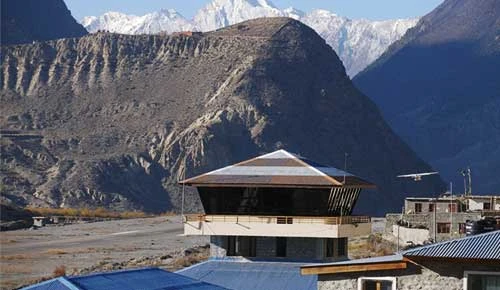
There are no direct flights to Syangbochen or Samar, but travelers can take a domestic flight from Kathmandu to Jomsom, the nearest airport. From Jomsom, you can hire a jeep or continue trekking to reach the villages. Flying gives a quick and scenic entry to Upper Mustang, with amazing views of the Kali Gandaki Valley, cliffs, and snow-capped peaks. This method saves several days compared to trekking the full route.
By Private Vehicle/Jeep
Private 4WD jeeps are available through trekking agencies or tour operators for those who want a faster and more comfortable journey. The usual route is Jomsom → Chhusang → Chele → Samar → Syangbochen, with stops at viewpoints and cultural sites along the way. This option allows travelers to enjoy sightseeing while reaching the villages without long trekking days.
Attractions and Activities in Syangbochen & Samar
- Chungsi (Ranchung) Cave: A sacred cave where Guru Rinpoche is believed to have meditated. It is tucked inside the cliffs and surrounded by tall rocks. The cave feels serene and peaceful, and visiting it gives a spiritual experience.
- Spiritual Atmosphere: The villages are quiet and peaceful. Colorful prayer flags wave in the wind, and the gentle breeze adds to the calm feeling. It is a wonderful place to relax, think, or enjoy the stillness of the mountains.
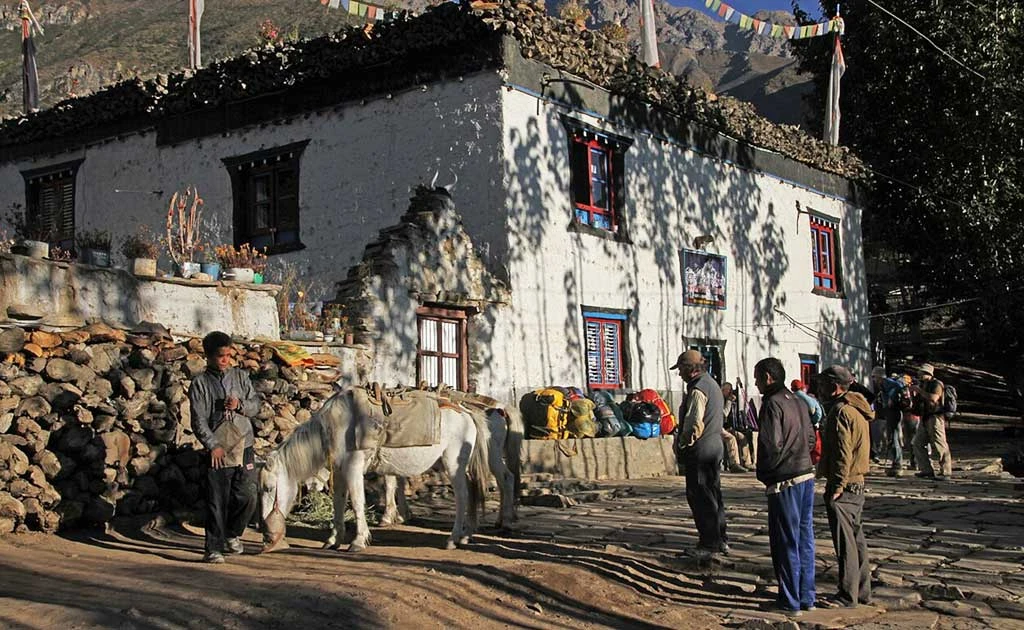
- Traditional Stone Houses: Both villages have old houses made from stone and mud. These traditional homes show the Mustang style of building and give a look at how locals have lived for generations.
- Barley Fields: Fields around the villages grow barley and other crops. They show how locals survive in this dry, high-altitude land. The fields also add color and life to the rocky landscape.
- Mani Walls and Chortens: Stone walls carved with Buddhist prayers and small monuments called chortens are found along the trails. They reflect local spiritual traditions and give visitors a glimpse of village religion.
- High Mountain Passes: Nearby passes give amazing views of valleys, cliffs, and distant snow-covered mountains. They are perfect for sightseeing, hiking, or photography.
- Wide Open Landscapes: The land around the villages is open with valleys, rocky hills, and big skies. The scenery feels vast and free, and spending time here is very relaxing.
- Local Village Life: Watching locals cook, farm, and go about their daily routines shows the real Mustang lifestyle. Visitors can also talk to villagers to learn more about their traditions.
- Photography Spots: The combination of desert-like land, traditional houses, and mountains makes excellent photo opportunities. Every corner offers something unique to capture.
- Short Treks and Walks: Gentle hikes to nearby hills or valleys give wonderful views and let travelers explore the surroundings at a relaxed pace.
- Cultural Immersion: Spending time with villagers, seeing their daily life, and learning about their culture gives a deep understanding of Mustang traditions.
Syangbochen and Samar are more than just scenic spots. They are full of culture, history, and natural beauty, making them an important stop for anyone visiting Upper Mustang.
Weather and Climate
The weather in Syangbochen and Samar is mostly dry and windy. Unlike other parts of Nepal, these Himalayan villages get little rain. The land is open and rocky, with wide valleys and very few plants. Winds blow often, especially in the afternoons, and they shape both the land and the way people live. Their presence makes the area look almost like a desert, very different from the green hills in lower Nepal.
The best time to visit is spring (March to May). The days are warm and ideal for walking or trekking, but the nights can be cold because of the high altitude. The skies are usually clear, giving beautiful views of valleys and snow-covered mountains far away. Summer (June to August) is also okay to visit since it rains very little, but it can be windy and the sun stronger. Autumn (September to November) is another good time to visit. The air is fresh, the weather is steady, and visibility is excellent for trekking, sightseeing, and taking photos.
Winter (December to February) is cold and harsh. Temperatures can drop below freezing, snow may fall, and strong winds make travel hard. Many lodges close for the season, so visitors need to be well-prepared. The weather in Syangbochen and Samar affects both the landscape and daily life, giving travelers a special experience in every season.
Accommodation
Places to stay in Syangbochen and Samar are simple and basic, giving travelers a chance to experience local village life. Most people stay in small teahouses or family-run lodges. These lodges provide only the essential things you need, rather than modern comforts. Rooms usually have twin beds with blankets, wooden floors, and very little furniture. Bathrooms are often shared, and hot showers may be limited or only available at certain times, depending on the weather and water supply. Electricity is mostly solar-powered, so lights can be dim at night.
Even though the lodges in Syangbochen and Samar are not fancy, they are cozy and welcoming. Local families run most of the lodges, treating guests with kindness. Evenings are quiet, and travelers often sit in the shared dining area to rest, eat, and enjoy the peaceful mountain surroundings. Staying in these lodges gives visitors a real sense of life in Upper Mustang and a chance to feel connected to the local culture and village way of life.
Food
Food in Syangbochen and Samar is simple, traditional, and hearty, perfect for the cold, high-altitude weather. Meals are usually cooked fresh in the teahouse kitchens with local ingredients. The most common dish is dal bhat, which includes rice, lentils, and vegetables; it gives you energy for trekking. Other common foods are fried rice, noodles, vegetable soups, and potatoes.
Local foods like tsampa (roasted barley flour) and Tibetan bread are sometimes served, especially in family-run lodges. The portions are large, and the meals are made to keep travelers warm and full of energy for long days of trekking. Eating here gives you a taste of real Mustang food and a true feel of village life. The menu is simple and not very varied, but the food is filling and comforting. Instead of fancy presentation or many choices, the focus is on warmth, energy, and simplicity. Every meal is important and satisfying, making it a key part of the Upper Mustang experience.
Things to Do in Syangbochen
- Enjoy the peaceful atmosphere and wide mountain views surrounding the village.
- Walk through the village and observe the simple daily life of the local people.
- Visit nearby chortens and mani walls that reflect strong Buddhist traditions.
- Stop at prayer flag viewpoints and enjoy the open valley landscapes.
- Use Syangbochen as a rest point or acclimatization stop during your Upper Mustang journey.
- Take short hikes toward surrounding hills and valleys for scenic views.
- Experience the quiet, less-crowded side of Upper Mustang away from busy routes.
- Capture unique photographs of desert landscapes and traditional houses.
- Interact with local families and learn about their lifestyle and culture.
- Enjoy calm evenings under clear skies and star-filled nights.
- Reflect and relax in a peaceful setting surrounded by nature and silence.
Conclusion
Syangbochen and Samar are small villages, but they are essential for anyone traveling through Upper Mustang. Tibetan Buddhism strongly influences these villages, imbuing them with a wealth of history. You can see old chortens, colorful prayer flags, and sacred caves all around. With wide valleys, rocky hills, and stunning mountain views, they let travelers enjoy the beauty of Mustang in a calm and quiet way, away from the busy trekking paths.
If you want to see real village life and experience the local culture, Syangbochen and Samar are excellent places to stop. The lodges are simple, the food is filling and homemade, and the villagers are friendly and welcoming. Whether you come here to rest, adjust to the high altitude, or just take in the peaceful landscapes, these villages leave a lasting memory. They are quiet, beautiful, and give a true sense of life in the high Himalayas.