Lobuche Peak Climbing Difficulty
Lobuche Peak Climbing could already be on your list of adventures if you want to stand tall amid the snow-capped giants of the Himalayas. Lobuche Peak is one of Nepal's most popular trekking peaks, and with good reason. It rises to 6,119 metres (20,075 feet). It has the excitement of climbing a Himalayan peak and the stunning vistas of Everest, Lhotse, Ama Dablam, and Nuptse. But before you get your kit ready and put on your boots, you should ask yourself one important question: How difficult is it to climb Lobuche Peak? We'll go over everything you need to know about how difficult it is to climb Lobuche Peak in this blog. We'll discuss the weather, the route conditions, the altitude problems, the physical fitness needs, the technical abilities you need, and how to get ready, all in a helpful and easy-to-understand way.
Overview of Lobuche Peak Climbing
There are two primary peaks on Lobuche Peak: Lobuche East and Lobuche West. The Nepal Mountaineering Association (NMA) says that Lobuche East Peak (6,119m) is the official trekking peak; hence, most climbers travel there. Lobuche West (6,145m), on the other side, is a harder and more difficult climb that needs its own expedition permit.
The Everest Base Camp Trek path takes you to Lobuche Peak. Along the trip, you'll pass through well-known Sherpa towns, including Namche Bazaar, Tengboche, Dingboche, and Lobuche Village itself. The path allows you ample time to adjust to the high altitude and relish the breathtaking views before you begin your ascent.
Table of Contents


How Difficult Is Lobuche Peak to Climb?
When people hear the word "Himalayan Peak," they often think of something impossible to reach or highly dangerous. However, the ascent to Lobuche East Peak is classified as a "trekking peak", meaning that physically fit individuals with some climbing knowledge can attempt it. Climbing Lobuche Peak is still not simple. It can be hard at times; it's up high, and the days are long and hard on the body. The challenge may change depending on the weather, the quality of the trail, and your exercise level. Let's take another look at these.
Altitude and Acclimatization Challenges
The fact that Lobuche Peak is so high makes it the hardest thing to climb. At over 6,000 metres, the air is only half as thick as it is at sea level. Most trekkers experience fatigue, shortness of breath, or mild headaches as they ascend higher.
You need to become acclimated to the greater altitude to prevent Altitude Sickness (AMS). That's why most plans include days off at places like Dingboche (4,410m) and Namche Bazaar (3,440m) before heading to Lobuche Base Camp (4,950m). Even after acclimatization, the thin air and steep slopes make the ascent to High Camp (5,400 m) challenging.
Climbers could become accustomed to it, however, provided they proceed at a steady, moderate pace and take stops. Before climbing Lobuche Peak, learn about Lobuche East and its height.
Physical Fitness and Endurance
Being physically healthy is a big part of your success. You don't have to be a professional athlete, but you should be in excellent shape, strong, and psychologically ready. The trek to base camp takes many days and requires trekking 6–8 hours a day on difficult terrain.
It takes stamina, leg strength, and cardiovascular endurance to climb from High Camp to Summit and back (typically 8–10 hours). The hardest portion of the Lobuche Peak climb is the summit day, but it's also the day with the greatest views of the Himalayas.
Running, trekking, biking, or climbing stairs for 2 to 3 months before the climb may make a major impact. It's just as vital to work on your legs and core strength. A successful strategy for becoming fit before climbing Lobuche Peak will make the trip go more smoothly and safely.
Technical Climbing Difficulty
Lobuche Peak is considered more technical than Island Peak or Mera Peak, mainly due to its steep icy slopes and narrow ridges. Climbers need to utilize fixed ropes, crampons, and ice axes to get to High Camp.
To get to the top ridge, you have to climb a slope of snow and ice that is 40 to 45 degrees steep. To achieve this, you need to know how to climb mountains. You need to know how to use crampons and ice axes correctly, how to climb and descend on fixed ropes with jumar and descender, and how to walk safely on glacier terrain with a harness.
Lobuche Peak may be difficult to climb, but most climbing packages include a training session at Lobuche Base Camp before the climb. There, expert instructors will teach you everything from how to use ropes to how to be safe.
Route Conditions and Terrain
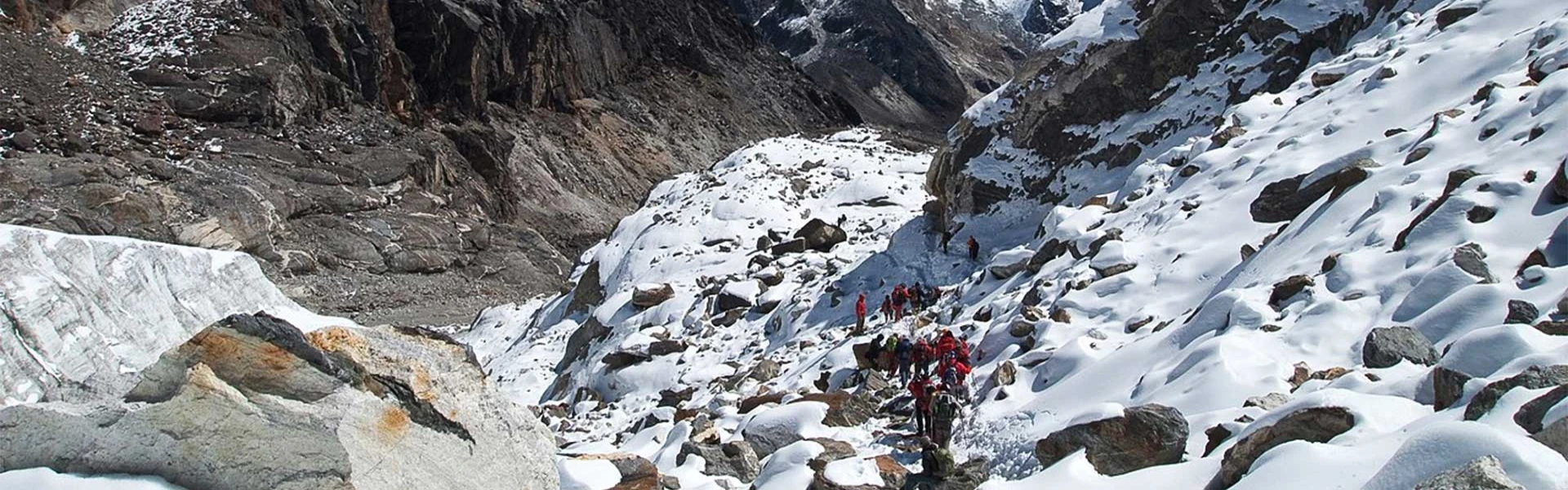
The Lobuche Peak journey begins on the well-known and beautiful Everest Base Camp path. The ground becomes rockier and rougher until you get to Lobuche Village. Expect a challenging climb over rocky terrain and snow from Base Camp to High Camp.
The last push to the top starts early in the morning, around 2 or 3 a.m. Climbers cross glacial areas with cracks, use ropes to climb snowy slopes, and follow a small ridge to the top.
The climb itself is not too hard or very hazardous, but you need to be cautious with your footing and pay attention. The weather may also change quickly, which makes the climb to the top of Lobuche Peak harder.
Weather and Seasonal Challenges
The weather has a giant effect on how difficult it is to climb Lobuche Peak. The finest times to climb are in the spring (March to May) and the fall (September to November). The weather is consistent, the skies are clear, and you can see well throughout these months.
The ascent becomes more difficult in the winter (December to February) when temperatures dip below -20°C at higher levels. It might be difficult to go forward when there are snowstorms and freezing winds.
During the monsoon season (June to August), there is a lot of rain and the paths become slick, making climbing dangerous. Plan your climb during the best season for Lobuche Peak, when the weather is most likely to be favourable, for the greatest experience.
Duration and Daily Itinerary Difficulty
Climbing Lobuche typically takes 17 to 20 days, giving enough time for steady altitude acclimatization and a safe summit approach. Travellers usually begin with the classic Everest Trail, moving gradually from Kathmandu to Lukla and onwards through Namche, Tengboche, and Dingboche. This slow ascent helps your body adapt to the rising elevation, which is essential for a successful climb.
For those seeking different experiences, we provide multiple journey styles, such as the longer Lobuche East expedition and Lobuche West Peak climbing adventure, as well as a short 3-day Lobuche summit itinerary for trekkers who are already acclimatized in the Everest region. While most trekking days involve moderate walking, the summit day is the most challenging, requiring 8 to 10 hours of continuous climbing.
Proper preparation, skilled guides, and well-planned rest days make the ascent not just achievable but deeply rewarding, offering breathtaking views of Everest, Ama Dablam, Lhotse, and the Khumbu glaciers.
Key Points to Understand Lobuche Climb
- Total Duration: Usually 17–20 days, depending on route selection and acclimatization schedule.
- Trekking Route: Begins with the Everest trail through iconic Sherpa villages and scenic valleys.
- Acclimatization Days: Integrated in strategic places like Namche and Dingboche to reduce altitude risk.
- Climbing Options:
- Lobuche East expedition for a classic peak climbing experience.
- West Peak adventure for climbers seeking slightly more technical excitement.
- A short 3-day Lobuche summit itinerary is suitable only for climbers who are already acclimatized.
- Summit Day Difficulty: The most demanding day, involving 8–10 hours of ascent and descent.
- Technical Support: Our professional guides provide safety instruction, equipment support, rope handling, and pacing guidance.
- Highlights: Panoramic Himalayan viewpoints, Sherpa culture, glacial landscapes, and a rewarding summit experience.
Mental Preparation and Confidence
Many climbers don't realize how important the mental side of climbing is. Not only can the long days, cold temperatures, and thin air wear you out physically, but they may also wear you out mentally.
It's just as vital to be physically healthy as it is to have a positive attitude and remain motivated. Keep in mind that the aim is not to be fast but to be consistent. When challenges arise on the mountain, maintain composure, have faith in your guides, and approach each step with determination.
When you're worn out and cold on the day you reach the top of Lobuche Peak, mental strength is your closest friend.
Role of Guides and Support Team
One major reason things are simpler and safer is because you have a Sherpa guide who knows what they're doing. Certified guides from Nepal Trek Adventure are incredibly useful when it comes to fixing ropes, making sure everyone is safe, and getting people through tough spots. They watch out for altitude sickness, cheer on the climbers, and handle all the little things that make the trip go well and be well-organized. Having a guide with you up Lobuche Peak greatly increases your chances of reaching the summit safely and successfully.
Common Challenges During Lobuche Peak Climbing
These are some common problems that climbers go through:
- Altitude sickness from gaining weight too rapidly at high altitudes
- On days near the summit, it was cold and windy.
- You'll feel exhausted after several days of trekking and climbing.
- Not wanting to eat or being thirsty at a high altitude
- Technical rope parts toward the summit ridge
Most of them can be dealt with if you plan ahead, go at the proper speed, and get support from an expert. It's crucial to listen to your body and drink enough water to get through the tougher parts of Lobuche Peak.
Tips to Make Lobuche Peak Climbing Easier
1. Start Training Early
You should start working out at least two to three months before the climb. Do aerobic exercises like trekking, walking, and climbing stairs to build up your stamina. You should also work on your legs and core strength
2. Acclimatize Properly
Stop at significant spots like Namche Bazaar and Dingboche to allow your body time to get acclimated to the high altitude. Don't rush the climb; traveling slowly and gradually will assist you avoid becoming sick from the high altitude
3. Pack Smart and Light
Only bring what you need. Make sure you have good down coats, thermal layers, gloves, and climbing boots. Gear that is light yet warm will make trekking and climbing a lot more pleasant.
4. Stay Hydrated and Eat Well
Drink a lot of water and consume things that provide you energy as you trek. Staying hydrated helps fight tiredness and problems that come with being at a high altitude when trekking Lobuche Peak.
5. Practice with Climbing Gear
Before you climb, you need to know how to use things like crampons, a harness, and an ice axe. Using fixed ropes and jumar devices can make you feel more confident when things become tough.
6. Climb with an Experienced Guide
Always travel with a certified guide or an experienced Sherpa team. Sherpa guides help you acclimate to the altitude, navigate, and deal with the weather.
7. Stay Mentally Strong
The climb might be challenging, particularly when you get to the top. Remain optimistic, approach each step with patience, and relish the journey rather than rushing to reach the peak.
8. Choose the Right Season
Plan your climb during the spring (March to May) or fall (September to November) when the weather is most consistent. The Lobuche Peak climbing path is safer and more rewarding when the weather is clear and warm.
Conclusion
How hard is it to climb Lobuche Peak? It’s relatively tough but possible with the correct preparation, training, and direction. You'll have to deal with high altitudes, cold weather, and difficult climbing, but you'll also get to see the Khumbu region from above, feel a sense of achievement, and be pleased to be among the Himalayan giants. Lobuche Peak has the right blend of difficulty and beauty for both experienced trekkers and first-time climbers who want to test their boundaries.
Are you ready to climb Lobuche Peak? Join Nepal Trek Adventure for a safe, well-planned, and amazing trip to the top of Lobuche Peak. Our professional Sherpa guides, high-quality gear, and personalized itineraries will make sure that you are comfortable and successful every step of the way. To make your goal of climbing Lobuche Peak in the Himalayas come true, call Nepal Trek Adventure immediately.
Anjila Bhujel
Drop us a message