Thorong La Pass: The Highest Pass in the Annapurna Circuit
All the challenges of the Annapurna Circuit make Thorong La Pass the most demanding for trekkers to conquer. This famous mountain pass stands at a height of 5,416 meters, which makes it the highest point of the entire trip. The journey consists of difficult conditions due to its inclined area and altitude; nevertheless, it still presents a breathtaking view of the white mountains and glaciers as well as the high peaks, which are the characteristics of the Annapurna and Dhaulagiri ranges. Getting to the top is a moment of astonishment, introspection, and pure Himalayan awe.
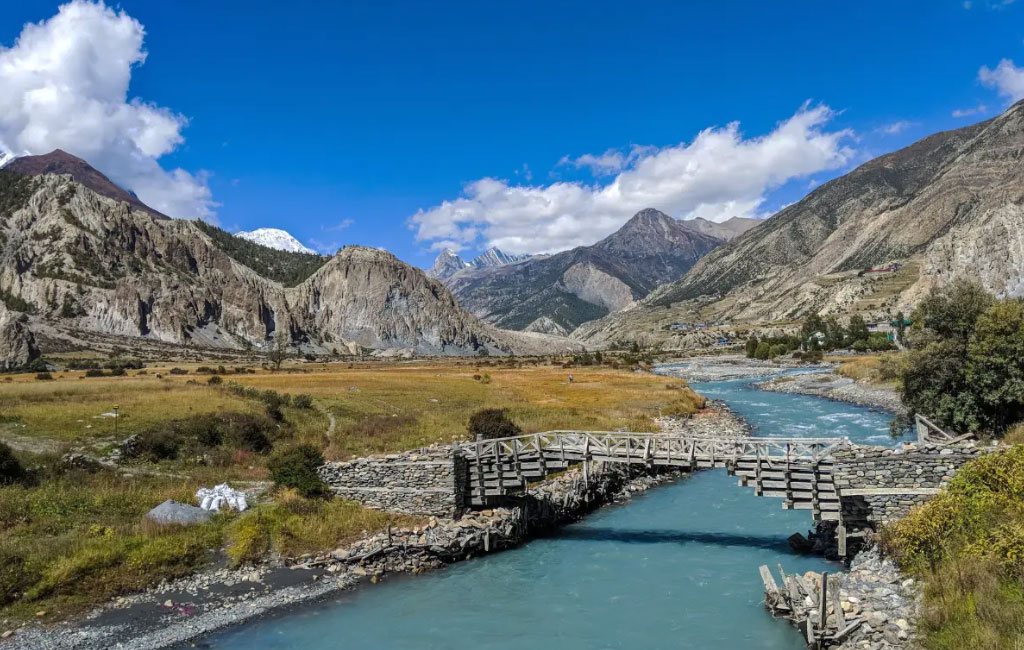
Table of Contents
![Annapurna Circuit Trek - 16 Days Annapurna Circuit Trekking]() Trending Trek
Trending Trek![Annapurna Circuit Luxury Trek]() Circuit Luxury Trek
Circuit Luxury Trek


Location and Geography of Thorong La Pass
Thorong La Pass, at an altitude of 5,416 meters, is situated between the two districts of Manang and Mustang in the Annapurna region of Nepal. It is the highest point of the world-famous Annapurna Circuit Trek, connecting through the amazing and varied landscape of the Himalayas from the one side of Manang’s green and pretty valleys to the other side of Mustang’s dry and windy hills.
The pass is nestled between Yakawa Kang and Khatung Kang, the highest mountains in the area, which makes it a great place for viewing the Himalayas, getting panoramic views of the mountains, and an extreme high-altitude adventure. Its prime location has always made it an important trade route, and nowadays, it is one of the most iconic and adventurous attractions for the trekkers that come to see Nepal’s varied and rugged mountain landscape.
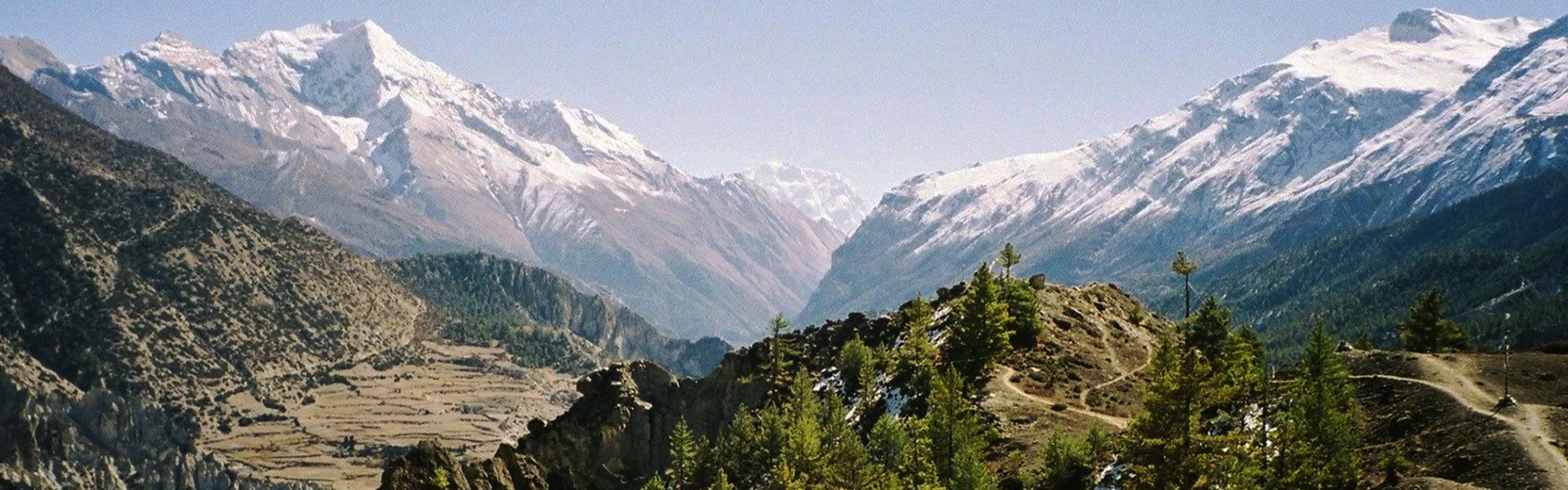
Geographically, the pass performs a vital function: it serves as a high-altitude bridge connecting two wildly different worlds. To the east, you have the arid, Tibetan-influenced atmosphere of the Manang Valley, known for its dry air, high plains, and ancient Buddhist culture.
Once you crest the pass and begin the long descent to the west, you enter the Muktinath valley, a landscape that transitions dramatically, famous for the sacred pilgrimage site of Muktinath and eventually leading toward the deep Kali Gandaki Gorge. Thorong La is the single, dramatic physical barrier you must overcome to make the transition between these two contrasting halves of the Himalayas.
The Myth, Magic & Meaning of Thorong La
For hundreds of years, traders and travelers have taken this route from Mustang to Manang. The traders transported salt, grains, wool, and spiritual beliefs. Local folklore indicates that the pass was held in place by powerful mountain spirits and that those who were of pure heart could cross safely. Many trekkers notice prayer flags, chortens, and mani walls in the area, which serve as protection and blessings to the travelers who pass through this area. The pass is located near important places of pilgrimage for both Buddhists and Hindus (such as Muktinath). Because the mountains are considered not just to be rock formations but also to be gods in their own right by those who live in the surrounding areas.
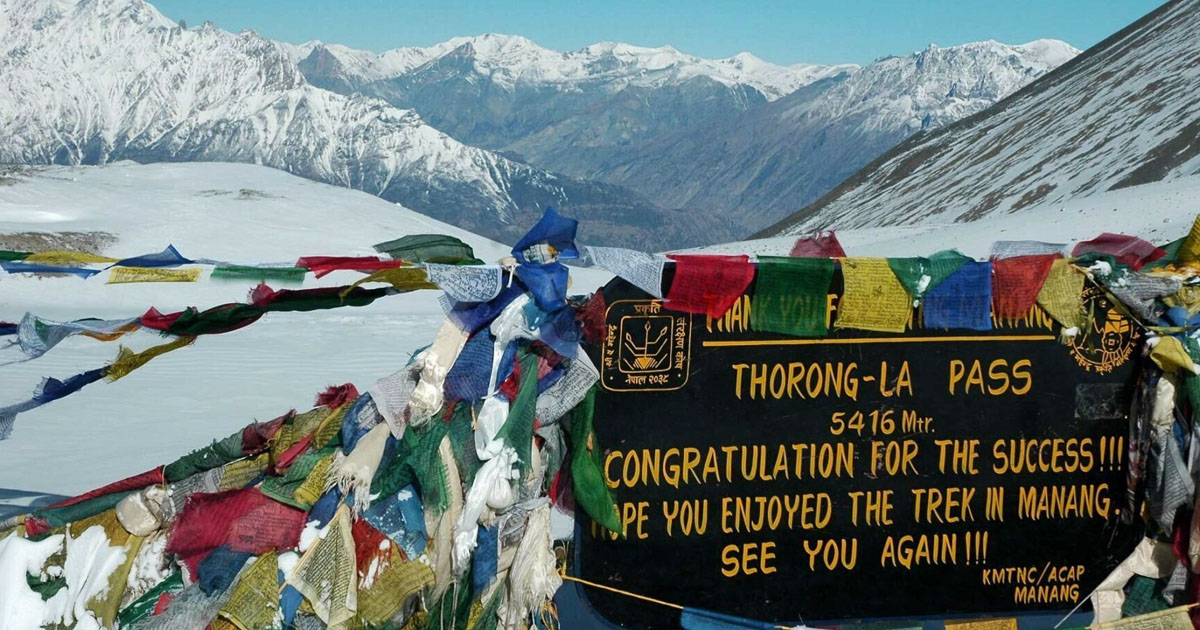
At the same time, the “magic” of Thorong La is grounded in real, tangible experience. Standing at 5,416 meters, the air is thin, the landscape is stark, and every step reminds you how powerful nature truly is. Reaching the top isn’t just a physical milestone; it carries emotional meaning because of the effort, preparation, and resilience it demands. Trekkers often describe a sense of clarity and humility at the pass, as if the silence and vastness wipe away noise and ego. The simple wooden sign at the summit feels symbolic: a reminder that ordinary people can achieve something extraordinary. The meaning of Thorong La isn’t found in dramatic stories alone; it’s found in the shared human moment of arrival, where exhaustion turns into pride, fear turns into gratitude, and the mountains silently acknowledge your journey.
Scenic Highlights of the Thorong La pass
Thorong La Pass provides trekkers with some of the most striking views along the Annapurna Circuit. The landscape shifts from massive Himalayan summits down into elevated valleys. It remains quite dramatic. The changes keep coming. Evidence from traveler accounts shows how unforgettable this all turns out to be. Once trekkers arrive at the pass, each further movement brings fresh rewards in the form of wide vistas and the full glory of the Himalayas. Those looking for a more luxurious journey across Thorong La might find the Annapurna Circuit Luxury Trek appealing, as it offers expert guidance, comfortable accommodations, and the perfect way to enjoy the breathtaking views. Here are the scenic highlights:
Majestic Himalayan Views
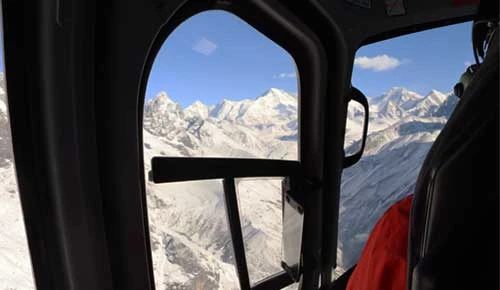
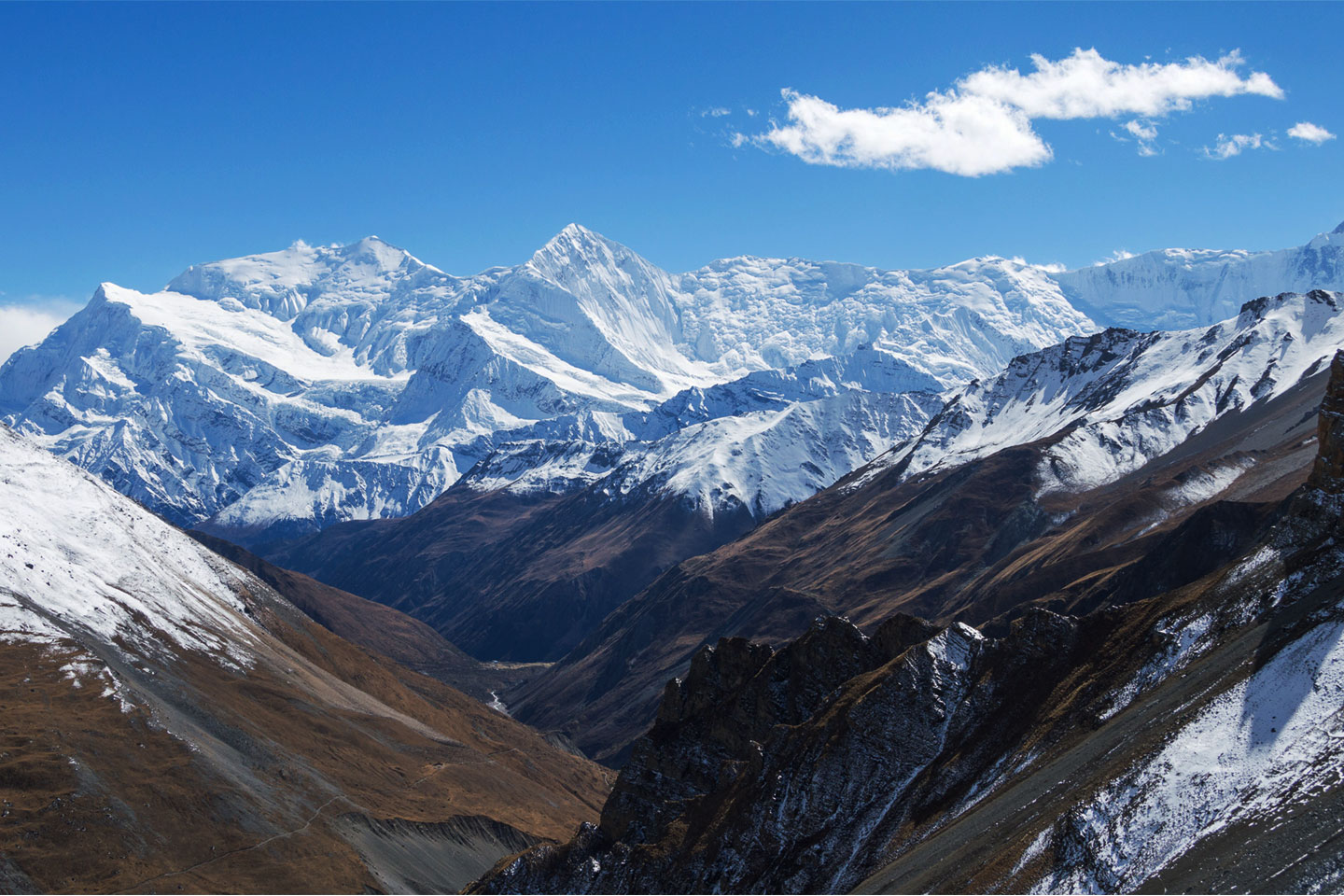
Trekkers reach Thorong La and find themselves looking at some really striking sights of the Annapurna II, Annapurna III, and Gangapurna peaks. Those slopes covered in snow catch the light just right, making everything sparkle a bit. The ridges come up sharp and bold right up to the skyline. Glaciers run down the sides like thin silver lines weaving through the rock. The whole setup feels massive, the kind of grand that hits you hard at first. Standing here, you can truly sense the vastness of the Himalayas and the sense of accomplishment that comes with reaching the highest point of the Annapurna Circuit.
Sunrise and Sunset Over the Peaks
The mountains in Thorong La are alive almost to the point of being magic, particularly during the sunrise and the sunset. The initial golden rays of the sun in the morning reach the snow-white tops and turn them into a golden landscape with shades of pink and tender orange. The shadows extend across the valleys and the ridges, glaciers, and peaks are all brought out in magnificent detail. The end of the day sends the warm and dramatic colors of the sunset to the rugged landscape, making the mountains and valleys appear to be of a surrealistic color.
Tilicho Peak and Glacier Views
The Tilicho Peak area feels like entering a pure alpine paradise. Glaciers and snowfields wind down its ridges. They catch the sunlight and gleam like silver strands. The rough landscape has frozen rocks scattered across icy slopes. This setup shows the Himalayas' raw strength and wild charm to anyone trekking there. If you want to combine the beauty of Thorong La with the serene landscapes of Tilicho Lake, the Scenic Tilicho Lake with Thorong La Pass Trek is a perfect choice, offering panoramic views and unforgettable experiences along the way.
Manang Valley Below
The Manang Valley lies underneath, and it is a richly colored tapestry of its own. Green fields, terraced farms and small Buddhist villages cover the land, and the streams and narrowed paths link them together. It is a calm and harmonious valley in contrast with the rugged, mountainous, cold topography of the pass and it allows trekkers to pause and look at the variety of Nepal in terms of landscape. It appears as if the valley is alive with the view of traditional houses, prayer flags and monastery roofs poking out of the greenery and full of stories, culture and warmth even in this isolated Himalayan landscape.
Muktinath and Mustang Region Views
Looking west from there, the land changes in a big way. It heads into the dry valleys around Muktinath and Mustang. Those golden hills and ridges hit by constant wind give off this sharp look, almost like something from another planet. The difference stands out between the green parts of Manang and these bare western spots. That really shows the wide range of scenery on the Annapurna Circuit. Standing at Thorong La, the trail comes into view as it twists down into steep ravines and empty rock faces. The unique beauty of this dry region feels serene, remote, and spiritually powerful.

High-Altitude Alpine Meadows
The high-altitude alpine meadows are scattered all over the slopes of Thorong La and are laden with hardy vegetation that survives the harsh circumstances. With rocks and spots of snow, these meadows make slight textures, which make the landscape alive and stratified. Passing or viewing them, trekkers are able to value the vulnerable yet strong life that lives in this very hostile world and thereby the experience will be personal and awe-inspiring.
Prayer Flags and Cultural Markers
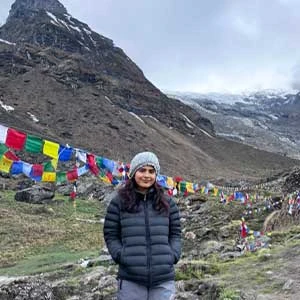
Finally, no visit to Thorong La is complete without noticing the brightly colored prayer flags and small cultural markers along the trail. The flags flutter in the Himalayan wind, creating movement and color against the stark white and gray of the high mountains. These spiritual symbols add a deeply human element to the natural grandeur, reminding trekkers of the rich Buddhist and Hindu traditions that have shaped life in these mountains for centuries. They create a sense of connection, purpose, and reverence that elevates the entire experience beyond just a visual feast.
Trekking Over Thorong La: A Day-by-Day Feel
Crossing Thorong La is that one day on the trek that feels bigger, tougher, and more emotional than anything before it. It doesn’t hit you all at once—it unfolds in stages, and each part has its own mood. You start in the frozen dark, climb slowly into thinner air, push toward a summit that feels unreal, and then watch the world change as the trail drops toward Mustang. It’s a long, demanding day, but also the one that stays with you the longest. Here’s what you move through, step by step:
Before Dawn: The Start in Darkness
The journey over Thorong La begins long before the sun even thinks of rising. Trekkers step out into the cold, guided only by headlamps and the faint outline of the trail ahead. The ground feels solid and frozen under your boots, and every step creates a crisp crunching sound in the still, silent air. You can see your breath drifting like smoke as the temperature sits well below freezing. It’s a moment that feels both eerie and exciting—your body is tired, but your mind is fully awake, aware that this is the biggest day of the trek. All around you, small dots of light from other trekkers move slowly upward, creating a trail of tiny stars on earth. The darkness wraps everything in mystery, and for a while, it feels like you’re walking through another world. This early start builds a quiet sense of determination that sets the tone for the challenge ahead.
The Climb: Oxygen Drops, Determination Peaks
Trekking over Thorong La starts before the sun rises. Trekkers walk out into the cold, lit only by a headlamp and the outline of the path ahead. The ground is solid and frozen beneath the trekkers' feet, and every step produces a crisp crunch in the quiet of night. Trekkers breathe out, and their breath drifts into the air like tiny clouds of smoke, making it obvious just how bitterly cold the morning really is. This moment is both exciting and haunting. You feel tired physically, yet your mind is awake with anticipation, knowing that today is the biggest day of the trek. Small dots of light from other trekkers are scattered around. The darkness makes everything appear mysterious. For a brief time, it seems that you are walking in a different universe. Starting out so early gives you a quiet sense of purpose and willpower that lays the foundation for the day's journey ahead.
The Summit: The Iconic “Congratulations!” Board
Reaching the top of Thorong La is a moment that hits both the body and the heart. When the “Congratulations! Thorong La Pass” board finally comes into view, relief and pride rush through you all at once. The wind is strong, the air cold, and yet you feel incredibly alive standing at 5,416 meters. Trekkers cheer, hug, laugh, or simply sit down and take it all in each reaction honest and deeply earned. This is where cameras come out, prayer flags flutter wildly, and the panoramic mountain views feel majestic and overwhelming. The famous signboard becomes the perfect photo spot, a symbol of endurance and achievement that many dream about for years. Some people leave a token or tie a flag, marking their presence in this frozen, breathtaking place. It’s a memory that stays etched in your mind long after the trek is over.
The Descent to Muktinath
You'll encounter a long, steady descent on the trail, which will prove more challenging for your tired knees and legs. You'll see a dramatic change in the landscape as you leave the snowy slopes behind and enter the rugged, brown terrain of Mustang. The beauty of the vast desert-like appearance that this area is famous for starts to come into focus with its wide valleys and wind-carved ridges extending out in the distance. Step by step, as you descend, the temperature begins to rise and you'll feel the weight of the high altitude diminishing. As you're experiencing this transition, you're also beginning to feel renewed excitement about the journey ahead. Each hour brings you closer to Muktinath and all the comfort, rest, and peaceful spirituality that this town will provide you at the end of the trail. It may seem to take a while to descend, but there is an underlying satisfaction in completing your crossing of the pass and entering into a new and open section of the world.
Best Time to Cross Thorong La Pass
Thorong La Pass is regarded among the top viewpoints by many. The pass is open for trekking all year round in a technical sense, but each season gives a unique experience to the trekker. The spring season (March to May) is the most preferred time, showing off the clear skies, the blooming of rhododendrons, and the comfortable temperatures of -5°C to 10°C (23°F to 50°F), which are typical at the pass.
The autumn season (September to November) also presents excellent conditions; the weather is stable, the air is crisp, and the temperatures range from 0°C to 10°C (32°F to 50°F) during the day. Thus, the period can be called a time when one could best savor the picturesque views of the Annapurna and the Dhaulagiri ranges.
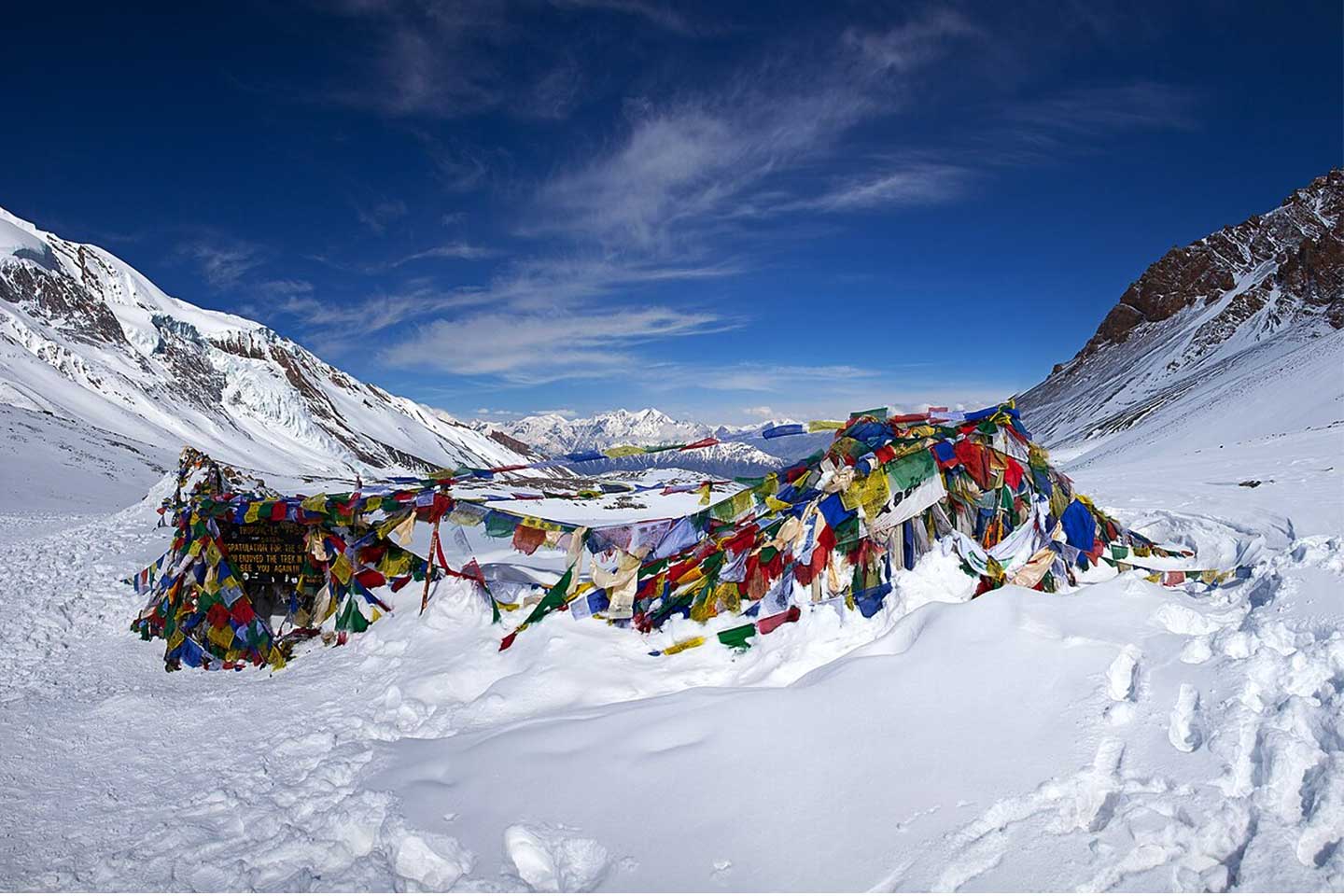
Winter (December up to February) is very cold and snowy, with high chances of drops in temperature at the pass often being below -15°C (5°F); it, therefore, comes out to be a more difficult trekking experience but still the most attractive for those who like to be alone in natural snowy beauty.
Summer (June to August) is the main monsoon season, with continuous rain in the lower regions and slippery trails in the upper area around Thorong La, which is relatively dry, sitting in the daytime temperatures of 0°C to 8°C (32°F to 46°F). The 5,416 m (17,769 ft) spot keeps on being freezing cold at night no matter what the season is; thus, the importance of proper layering is stressed.
Trekking in the right season not only guarantees safety but also the greatest chance to fully admire the unique Himalayan panoramas, a view that rewards one with every step along the route of the Annapurna Circuit.
Permits Required for Thorong La Trek
Proper permits are not only a legal requirement but also a way to support the conservation of the Annapurna region and ensure a safe, enjoyable trekking experience. For first-time trekkers, arranging permits in advance through a trusted agency is highly recommended, as it allows you to focus on the stunning scenery and challenges of Thorong La without any administrative stress. It requires two main permits to ensure both safety and legality. The first is the Annapurna Conservation Area Permit (ACAP), which allows access to the Annapurna Conservation Area, the largest protected area in Nepal. This permit helps preserve the fragile Himalayan ecosystem, including the flora, fauna, and high-altitude landscapes that trekkers pass through.
The second is the Trekkers’ Information Management System (TIMS) card, which is issued to all trekkers for safety tracking and registration purposes. The TIMS card is mandatory for all foreign nationals and helps authorities monitor trekkers in case of emergencies, particularly in remote high-altitude areas like Thorong La. Both permits can be obtained in Kathmandu or Pokhara, or through a registered trekking agency, which is often the easiest and fastest option. Fees for the ACAP and TIMS vary depending on nationality, and it is essential to carry them throughout the trek, as they are checked at multiple points along the Annapurna Circuit.
Challenges of Crossing Thorong La
Usually crossing the high Himalayan pass is marked as the hardest part of the Annapurna circuit that tests the trekkers’ endurance, power, and mental toughness. The altitude is 5,416 m (17,769 ft.), where the air is very thin, so every movement feels heavier, but still experienced hikers find the steep and rocky trails hard. Weather can very quickly change so that snow, wind, or no visibility suddenly comes in, thus making the trek even harder. One can easily get sickness from the altitude; therefore, it is mandatory to acclimatize properly to avoid life-threatening situations. The great achievement and the hot location for perfect photos at the summit are the very things that make all the hard work worth it. Below are shown the main difficulties:
- Extreme high altitude making every step physically demanding
- Risk of acute mountain sickness (AMS) with symptoms like headaches, nausea, and dizziness
- Steep, rocky, and uneven trails that test balance and stamina
- Unpredictable weather, including sudden snow, rain, and strong winds
- Bitterly cold temperatures, especially during early mornings and nights
- High physical endurance required due to long trekking hours at challenging slopes
- Limited facilities at higher elevations, making self-sufficiency essential
- Slippery or icy paths that increase the risk of falls and injuries
- Crowds during peak trekking season, which can slow progress and add stress
- Mental and emotional challenges of staying motivated in harsh, isolated environments
Tips for a Safe and Successful Crossing
Successfully crossing this high Himalayan pass requires careful planning, proper preparation, and respect for the challenges of the mountains. While the journey is incredibly rewarding, it can also be physically demanding and mentally taxing due to the altitude, weather, and rugged terrain. Following the right strategies and precautions can make the trek safer, more enjoyable, and more memorable, allowing you to fully appreciate the breathtaking panoramic views and the sense of achievement that comes with reaching the summit.
- Acclimatize properly by spending extra days at higher-altitude villages before the pass
- Start the trek early in the morning to avoid afternoon snow, clouds, and unstable weather
- Warm, moisture-wicking socks to prevent cold feet and blisters.
- Wear multiple layers including moisture-wicking base layers, insulating mid-layers, and waterproof outerwear
- Stay well-hydrated throughout the trek to help your body cope with thin air and high altitude
- Eat nutritious, high-energy meals and snacks to maintain stamina during long climbs
- Take regular short breaks to rest, catch your breath, and prevent exhaustion on steep sections
- Carry essential gear like trekking poles, crampons, and a first-aid kit for safety and stability
- Monitor your body for signs of altitude sickness and be ready to descend if symptoms worsen
- Check weather forecasts regularly and be prepared to adjust your schedule accordingly
- Maintain a steady, slow pace and focus on conserving energy rather than rushing to the summit
- Headlamp with extra batteries for the pre-dawn ascent
- UV-protected sunglasses to shield eyes from snow glare
Why Thorong La Pass Is a Trekker’s Dream
Thorong La feels like the kind of challenge that changes you from the inside out. The climb is tough, the air is thin, and there are moments when your legs feel heavy but that’s exactly what makes reaching the top so powerful. Standing at 5,416 meters, seeing the “Congratulations” sign, you feel a rush of pride that’s hard to put into words. It’s a moment where all the early mornings, cold winds, and slow steps suddenly make sense. That sense of achievement hits deep, not just “I did a trek,”, but “I pushed my limits and won.” It’s the kind of milestone people carry with them long after they’re back home.
What makes the journey even more unforgettable is how dramatically the world shifts around you. One side of the pass is icy, snowy, and raw, while the other opens into Mustang’s dry, wide, desert-like valleys two landscapes that feel like different planets. Along the way, you move through villages shaped by Tibetan-influenced traditions, prayer flags, monasteries, and warm smiles that give the trek a cultural heartbeat, not just a physical path. By the end, it’s more than a mountain crossing. It feels like a personal transformation, a reminder that the mountains don’t just show you new places; they show you new parts of yourself.
Conquering Thorong La Pass
Reaching the summit of Thorong La represents both a physical achievement and an unforgettable journey of endurance and discovery. From the breathtaking Himalayan panoramas to the unique cultural and natural landscapes along the way, every step of the trek leaves a lasting impression. While the pass presents real challenges, the sense of accomplishment, the serenity of high-altitude vistas, and the connection with the majestic mountains make it an experience that stays with trekkers forever.
Stop dreaming about the Himalayas. Contact Us to book your trek and stand on top of the world yourself!
Samikshya Khatiwada
Drop us a message