Last-Minute Helicopter Bookings in the Everest Region
Trekking in the Everest region is an unforgettable experience that remains forever, but it also involves uncertain challenges like high altitude, rugged trekking routes, and suddenly fluctuating weather conditions. Popular trekking trails in the Everest region, including Everest Base Camp Trek, Gokyo Valley Trek, Kala Patthar, and Gorakshep, put trekkers in high-altitude environments where trekkers face uncertain situations and trekking schedules and plans get suddenly altered. Thus, last-minute helicopter bookings in the Everest region form a critical aspect of trekking arrangements.
A major cause for the immediate helicopter trips from Everest is the fluctuating weather in the Everest region. The Lukla Airport, which is unsafe for either trekking or fixed-wing flights, is not very safe for the climbers, as it faces heavy snowfall, wind, and low vision, along with the possibility of flight cancellations in the airport itself. Helicopter departures from Everest for a final descent to Lukla, Namche Bazar, or Kathmandu, to help save the climbers from harsh conditions.

Another major cause for high-altitude helicopter evacuations in Nepal is health emergencies. Trekking can be prone to Acute Mountain Sickness (AMS), or in more adverse conditions, HAPE or HACE, particularly in the higher regions of Everest, like Lobuche, Gorakshep, or the Everest Base Camp. In these environments, an urgent helicopter evacuation can be an extremely life-saving option, descending into regions where medical aid can be accessed.
*Not every helicopter booking at the last minute is necessarily an emergency situation that involves the medicine.*
Not all last-minute helicopter bookings will be considered a medical emergency. Some trekkers opt for a helicopter return from Everest Base Camp or Gokyo due to last-minute changes in their schedules. Some trekkers who do not wish to go back the same way that they trekked may opt for a helicopter flight over the Everest region. This would make trekking in Nepal safer and more convenient.
Table of Contents
![9 Days Everest base camp trek with Helicopter Return is specially designed for travelers who want to enjoy full experience of trekking journey to base camp of World Tallest Mountain, Mt. Everest. It is Also known as Everest fly out trek.]() Best Seller
Best Seller![Helicopter Landing at Kala Patthar Viewpoint during Everest base camp helicopter tour]() Best Seller
Best Seller![Everest base camp trek 14 days itinerary]() Traveler's Choice
Traveler's Choice![Everest Base Camp Trek 3 Days, Namche Bazar Trek 3 Days]() Trek up to Namche Bazaar
Trek up to Namche Bazaar


Why Last-Minute Helicopter Bookings Happen in the Everest Region
Last-Minute Helicopter Bookings in the Everest region are normally when trekking plans change unexpectedly, mostly in the upper parts of the region as altitude, weather and health risks escalate rapidly. Unlike planned scenic flights, these bookings sometimes require urgent decisions to guarantee safety, time savings, or respond to an unexpected situation that makes going on with the trek dangerous or impractical.
- Sudden weather conditions like snowfall, heavy winds, or poor visibility in higher elevations
- The symptoms of Acute Mountain Sickness (AMS) appearing or worsening at altitudes above 4,500 meters
- Medical emergencies or injuries that make walking downhill unsafe or extremely slow
- Trekkers needing to skip the return trek due to tight international or domestic flight schedules
- Delays due to canceled Lukla flights or blocked mountain trails
- Physical exhaustion or loss of energy after reaching Everest Base Camp or others viewpoints
- Unexpected personal or professional schedule changes needed immediate return
- Safety concerns raised by guides due to rapidly changing mountain conditions

Typical Upper-Everest Scenarios Requiring Helicopter Support
Trekking in the upper part of the Everest region means operating in a place where the altitude, weather, and physical condition may change very rapidly. Above Lobuche and especially around Gorakshep, Everest Base Camp, and Kala Patthar, trekking back is not the smartest option or even the safest course of action. In these situations, helicopter evacuation becomes a critical solution, either for medical safety or to respond to sudden logistical challenges.
Below are the most common real-world scenarios where last-minute helicopter evacuation is required in the upper Everest region.
| Scenario | Altitude/Location | Primary Reason | Evacuation Purpose |
| Severe AMS (Acute Mountain Sickness) | Lobuche (4,910m), Gorakshep (5,140m), EBC (5,364m) | Headache, nausea, dizziness, low oxygen | Immediate descent to lower altitude for treatment |
| HAPE / HACE Symptoms | Gorakshep, EBC, Kala Patthar | Fluid in lungs or brain due to altitude | Life-saving emergency evacuation |
| Sudden Snowstorm or Whiteout | Kala Patthar, Gorakshep, EBC | Heavy snowfall, zero visibility | Safe exit when trekking becomes dangerous |
| Extreme Wind Conditions | Upper Khumbu region | High-speed winds affecting balance | Prevents falls and exposure risks |
| Trail Closure Due to Weather | Thukla–Lobuche, Lobuche–Gorakshep | Snow-blocked or icy trails | Alternative exit when walking routes are unsafe |
| Physical Injury | Upper Everest trails | Falls, sprains, fractures | Avoids carrying patient over steep terrain |
| Severe Exhaustion or Altitude Fatigue | Above 4,800m | Body unable to continue safely | Prevents health deterioration |
| Skipping Return Trek | Gorakshep, Gokyo, Dzongla | Time constraints or low energy | Saves 3–5 days of downhill trekking |
| Delayed Trek Schedule | Upper Everest region | Weather delays, acclimatization issues | Helps meet domestic or international flights |
| Missed Lukla Flight Window | Upper Khumbu region | Unpredictable Lukla weather | Direct helicopter transfer to Kathmandu |
| Guide-Recommended Evacuation | Any high-altitude location | Early warning signs of AMS or injury | Prevents condition from worsening |
| Emergency Group Separation | Upper trekking routes | Trekker unable to keep pace | Safe and controlled evacuation |
| Night-Time Health Deterioration | Gorakshep, Lobuche | Sudden medical symptoms | Early-morning priority evacuation |
| Psychological Distress at Altitude | High camps and remote areas | Panic, anxiety, disorientation | Ensures safety and mental well-being |
How Last-Minute Helicopter Bookings is Done
The last-minute helicopter bookings in the Everest region are not managed differently with pre-planned scenic flights. In most cases, emergency, safety-driven decisions especially when trekkers are located in the upper parts of the region like Lobuche, Gorakshep, Everest Base Campor any other high passes. Below is a clear, step-by-step explanation of how the process usually works.
Step 1: Immediate Assessment on the Ground
The process begins on the trail or at a teahouse when a guide notices worsening conditions. This could be due to severe AMS symptoms, sudden injuries, extreme weather changes, or a client needing to skip the return trek because of time constraints.
In the high-altitude, it is often dangerous to delay and make decisions and therefore the guides tend to be fast-acting and prioritize safety over the itinerary plans.
Step 2: Contacting the Trekking Company or Operations Team
When the situation is confirmed the guide will communicate with the operations team of the trekking company at Kathmandu or Lukla. The guide shares important details right away, including:
- Exact pickup location and altitude
- Number of people needing the flight
- Reason for the last-minute request (AMS, injury, weather, or schedule change)
- Current weather conditions at the location
This step is very important because evacuations in the upper Everest region need fast and clear coordination.
Step 3: Weather and Helicopter Availability Check
After receiving the details, the operations team checks the current weather along the flight route and confirms if a helicopter is available. The weather in the Everest region is highly unpredictable when it involves helicopters especially above 4,500 meters.
At the same time, they confirm:
- Helicopter availability nearby (Lukla, Pheriche, or standby bases)
- Pilot clearance for high-altitude landing
- Feasibility of landing at the requested location or the nearest safe zone
In case the conditions are marginal, the pilot may suggest waiting for a short time or changing the pickup point.
Step 4: Landing Permission and Safety Clearance
In places such as Gorakshep or near Everest Base Camp, landing permissions and safety checks are compulsory. Not every spot is suitable for landing because of the terrain, wind, or snow cover.
In other cases, the trekkers may be asked to walk to a safer nearby landing area guided by the local staff members so that they can be picked up safely and smoothly.
Step 5: Cost Confirmation and Payment Arrangement
Because these are last-minute and often emergency-based bookings, costs are usually higher than planned flights. Payment is handled quickly to avoid delays. This may include:
- The client paying directly
- Insurance approval, mostly for AMS or medical emergencies
- Temporary confirmation, with documents sent later
For medical evacuations, insurance details are shared immediately to avoid delays.
Step 6: Preparation for Immediate Pickup
While the helicopter is on the way, trekkers are instructed to prepare quickly. This usually includes:
- Packing only essential items (warm layers, documents, medication)
- Securing loose gear to avoid rotor wash hazards
- Following strict safety instructions from the guide and pilot
At high altitude, helicopters often keep engines running, so boarding is done swiftly and carefully.
Step 7: Evacuation or Transfer Flight
Once onboard, the helicopter usually descends rapidly to a safer altitude such as Pheriche, Namche Bazaar, Lukla, or directly to Kathmandu, depending on the situation.
For AMS cases, descending to a lower altitude is already a big part of the treatment. Medical support is arranged as soon as the helicopter lands.
Step 8: Post-Flight Support and Follow-Up
After landing, the trekking company continues to assist with:
- Medical checkups or hospital transfers
- Hotel arrangements if the trek ends early
- Flight rescheduling or itinerary changes
This final step ensures that even a sudden end to a trek is handled smoothly and professionally.
Cost and Practical Considerations of Last-Minute Helicopter Bookings in the Everest Region
Last-minute helicopter bookings in the Everest region are usually more expensive than pre-planned flights. The reasons are associated with urgency, difficulties associated with conducting flights, and availability constraints. In contrast to scheduled flights conducted through organized tours for tourists, urgent or last-minute flight requirements entail readiness and rapid mobilization of helicopters and pilots in extreme high-altitude environments. In cases involving evacuations in upper regions of Gorakshep, Lobuche, and areas around Everest Base Camp, associated risks of thin airs and winds increase costs.
Another key consideration that affects costs is altitude and location. When a helicopter has to land at an altitude of over 4,500 meters, the process is challenging, and a shuttle may need to make multiple flights to ensure that the helicopter weighs less and that evacuation can be accomplished safely. In most evacuation operations, helicopters often cannot accommodate all passengers when flying from a high altitude, thus increasing fuel costs, flying time, and associated expenditures.
Weather conditions also play an important part in the pricing and viability of flights, especially in the Everest area, as they are highly contingent on flight visibility, wind speed, and cloud conditions. Even for last-minute bookings for a helicopter service, sometimes unfavorable weather conditions might keep the project pending or hold it back until the next available time, for which an amount for waiting costs is required.
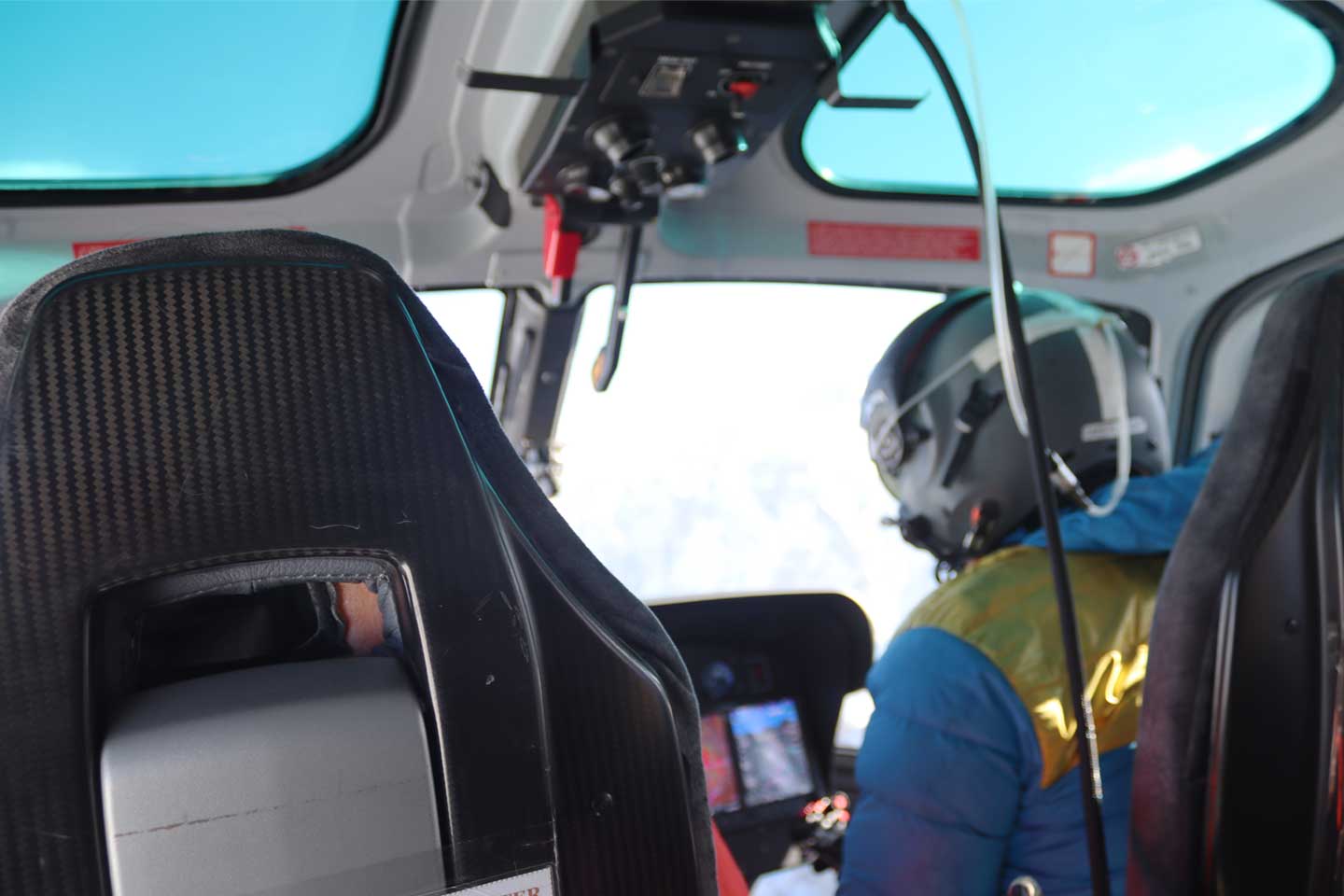
Weight restrictions are another important consideration. The flight weights for helicopters flying at a higher altitude should not be underestimated. The weights will include all the passengers, luggage, and medical equipment. Trekkers will often be asked to forgo unneeded items or have the items forwarded at a later date using a porter or cargo flight.
Being insured is essential in managing costs. Many emergency helicopter evac repayments or claims can be covered through trekking or travel insurance once AMS or illness/injury is confirmed by a licensed physician. Satisfying insurance companies beforehand or after the evacuation would require documentation and clearance. If insurance does not cover the situation, such as when a client wants to stop trekking and return due to unexpected reasons, the cost of the helicopter flight must be paid directly by the client.
Good timing and clear coordination are very important. Last-minute helicopter flights depend a lot on experienced trekking companies, guides, and good communication between pilots, ground staff, and clients. Delays or hesitation can increase risk, especially in areas above Everest, where weather and conditions change very quickly. In this sense, trekking individuals must prepare both mentally and logistically in advance for a possible sudden use of a helicopter.
Helicopter Flights Mostly Used for Last-Minute Bookings
In the Everest region, last-minute helicopter bookings are usually required for emergency evacuations, health issues, or sudden schedule changes. Certain flight routes are more commonly used due to their strategic location in high-altitude areas or popular trekking trails. Below is a list of helicopter flights most frequently utilized for such situations:
| Flight Route | Common Use / Reason for Last-Minute Booking |
| Kathmandu to Lukla Helicopter Flight | Quick start of trek or schedule adjustments |
| Lukla to Kathmandu Helicopter Flight | Early trek termination, evacuation, or missed flights |
| Gorakshep to Kathmandu Helicopter | AMS, altitude sickness, or medical emergencies near Everest Base Camp |
| Lobuche to Kathmandu Helicopter Flight | High-altitude sickness or injury evacuation |
| Dingboche to Kathmandu Helicopter Flight | Medical emergencies or sudden descent from high camps |
| Pheriche to Kathmandu by Helicopter | Health issues or emergency evacuation from trekking routes |
| Khare to Lukla Helicopter Flight | Rapid evacuation from high-altitude peaks or camps |
| Hotel Everest View to Kathmandu Helicopter | Travelers skipping return trek for convenience |
| Namche Bazaar to Lukla Helicopter Flight | Shortening trek or itinerary changes |
| Namche Bazaar to Kathmandu Helicopter | Urgent descent from mid-trek location |
| Khumjung to Kathmandu by Helicopter | Emergency evacuation from Solu-Khumbu villages |
| Monjo to Kathmandu by Helicopter | Evacuation from lower trekking checkpoints |
| Tengboche to Kathmandu Helicopter | Quick return from trekking hubs or sudden schedule change |
| Machhermo to Kathmandu Helicopter Flight | Evacuation from the Gokyo region due to health or weather |
| Kongde to Kathmandu Helicopter | Urgent pickup from side peaks or alternative trekking routes |
Safety Tips and Preparation
Last-minute helicopter flights in the Everest region usually happen in difficult and risky situations, especially at high altitude. Most of the time, people are stressed and worried. If you know what to expect and stay mentally prepared, the evacuation or transfer becomes easier and safer. Even in emergencies, basic safety rules are important so pilots, guides, and passengers can work properly together.
- Always carry valid travel insurance that covers high-altitude helicopter evacuation
- Follow your guide’s instructions carefully during pickup and landing
- Pack only essential items and keep your load as light as possible
- Wear warm, windproof clothing as temperatures drop rapidly at higher elevations
- Secure loose items such as hats, bags, or trekking poles before boarding
- Stay calm and seated until the pilot or crew signals it is safe to move
- Inform the crew about any medical condition or discomfort before takeoff
- Keep emergency contacts and identification easily accessible
Pros and Cons of Last-Minute Helicopter Bookings
Last-minute helicopter flights in the Everest region are mostly taken because there is no other choice. This may be due to AMS evacuation from places like Gorakshep, sudden weather changes in higher areas, or travelers who want to avoid the long walk back. However, while they provide safety and time efficiency, they also come with certain limitations that trekkers should understand.
| Pros | Cons |
| Immediate Response in Emergencies – Crucial for AMS, injuries, or sudden health deterioration at high altitude | High Cost – More expensive due to urgency, limited availability, and operational challenges |
| Life-Saving at High Altitude – Rapid descent significantly reduces risks related to altitude sickness | Weather-Dependent – Flights may be delayed or canceled due to poor visibility or strong winds |
| Saves Time and Energy – Ideal for trekkers who need to skip the long and exhausting return trek | Limited Seating & Weight Restrictions – Strict weight limits can affect group evacuations |
| Access to Remote Upper Everest Locations – Can reach areas like Lobuche, Gorakshep, and near EBC | Landing Limitations – Not all high-altitude areas allow safe or direct landings |
| Professional Coordination – Managed by experienced pilots and trekking agencies | Requires Quick Decision-Making – Limited time to compare options or costs |
| Peace of Mind for Trekkers and Families – Knowing evacuation is possible reduces stress | Insurance Approval Delays – Medical evacuations may require insurer confirmation |
| Flexible Route Options – Can fly directly to Lukla, Namche, or Kathmandu depending on condition | No Guaranteed Timing – Priority is given to medical evacuations, affecting schedules |
| Reduces Physical Risk – Prevents further strain on an already weakened body | Not Always Available – Helicopters may already be engaged in other rescue missions |
Conclusion
Last-minute helicopter bookings in the Everest region has nothing to do with comfort or accessibility but are about safety, survival, or responsible trekking for that matter. The factors of higher elevation, unpredictable weather, and physical exertion make it necessary for anyone traveling to the Himalayas to prepare for emergency situations.
Even for the most seasoned trekker, the possible need for a helicopter evacuation is never something they look forward to experiencing. However, having at least a general understanding of the system that is in place is definitely something that will give them that extra bit of assurance and peace of mind.
Many people find that the key is having the proper insurance coverage and guides in place so that as a trekker, if you or your trekking team need a helicopter at the last minute for evacuation purposes in the Everest region, you should act fast and seek the help of professionals. You can Contact us for assistance, and we work with professional pilots, trekking guides, and the relevant authorities to make all the necessary helicopter arrangements for you as soon as possible, regardless of whether you need a helicopter for a medical evacuation, because of the weather, or if you need to change your trekking plans at short notice in the Everest region.
Anjila Bhujel
Drop us a message